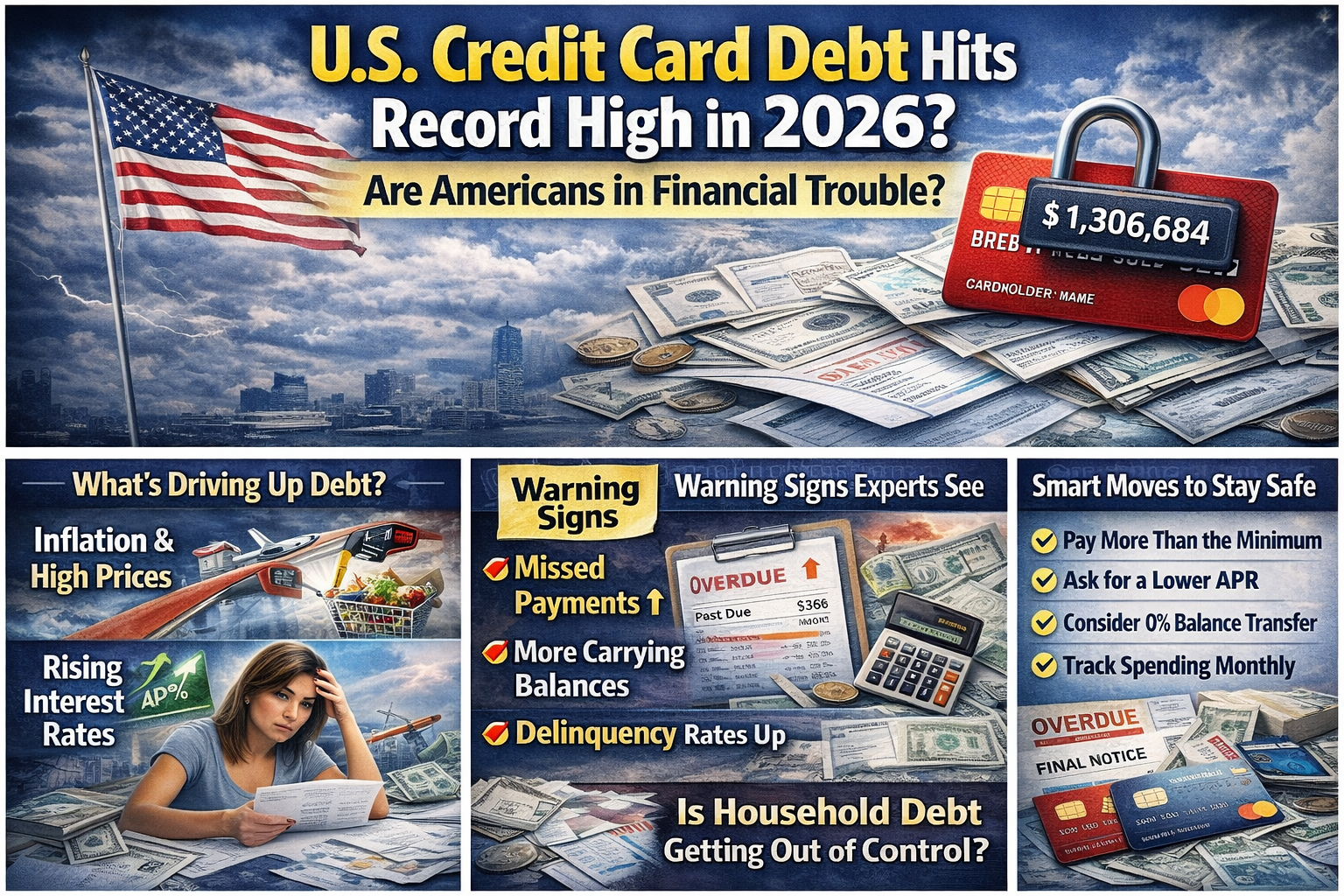
Credit cards have always been a financial tool — but in 2026, they’ve become a financial headline.
With U.S. credit card debt reaching record levels, millions of Americans are asking the same question:
👉 Is this a normal economic cycle — or a warning sign?
Let’s break it down in simple terms.
📊 Why Credit Card Debt Is Rising
Several major factors are driving the surge:
1️⃣ Inflation Pressure
Even though inflation has cooled compared to previous years, prices for groceries, rent, insurance, and utilities remain high. Many households are using credit cards to bridge the gap between income and expenses.
2️⃣ Higher Interest Rates
Average credit card APRs are now above 20% in many cases. When people carry balances, interest compounds quickly — making debt grow faster than expected.
3️⃣ Strong Consumer Spending Culture
Americans continue spending on:
- Travel
- Dining
- Subscriptions
- Online shopping
Credit cards make spending easy — sometimes too easy.
⚠️ The Warning Signs Experts Are Watching
It’s not just the total debt that matters — it’s how people are managing it.
Here are the key red flags:
- Rising delinquency rates (late payments increasing)
- More people making only minimum payments
- Higher balances carried month to month
- Younger consumers entering debt earlier
If these trends continue, financial stress could rise significantly.
💡 Is This a Crisis or Just a Trend?
Here’s the important part:
This is not 2008.
Most Americans still: ✔ Have jobs
✔ Are making payments
✔ Have access to credit
However…
The risk increases if:
- The job market weakens
- Interest rates remain high
- Consumers rely too heavily on revolving balances
So it’s not a collapse — but it is a pressure point in the economy.
🧠 What This Means for Everyday Americans
If you carry a balance, high APRs mean:
Example: $8,000 balance at 24% APR
You could pay over $1,900 in interest per year if not paid down quickly.
That’s money that could otherwise go to:
- Savings
- Investments
- Emergency funds
Debt reduces financial flexibility.
🚨 Important Points You Should Not Ignore
🔹 Paying only the minimum keeps you in debt longer
🔹 Missing one payment can damage your credit score
🔹 High utilization (above 30%) lowers your score
🔹 Balance transfers can help — but only if managed responsibly
🔹 Debt snowball or avalanche strategies reduce interest faster
Financial awareness is more important now than ever.
🛡️ Smart Moves in 2026
If you want to stay financially strong:
✔ Pay more than the minimum
✔ Set up automatic payments
✔ Ask for a lower APR
✔ Consider 0% balance transfer offers
✔ Track your spending monthly
✔ Build a 3–6 month emergency fund
Credit cards are powerful — but they must be controlled.
🔮 The Bigger Economic Picture
High credit card debt tells us one thing clearly:
Americans are still spending.
That keeps the economy moving — but it also increases household risk if conditions change.
The real issue isn’t credit cards themselves.
It’s whether consumers are using them strategically — or relying on them for survival.
📌 Final Thoughts
Record-high credit card debt in 2026 doesn’t automatically mean disaster.
But it does mean:
⚠️ Interest costs are draining wallets
⚠️ Financial discipline matters more than ever
⚠️ Smart planning separates stability from stress
If you use credit cards wisely — paying on time and avoiding large revolving balances — they can build your credit and reward you.
If not, they can quietly become your most expensive financial habit.