Imagine this…
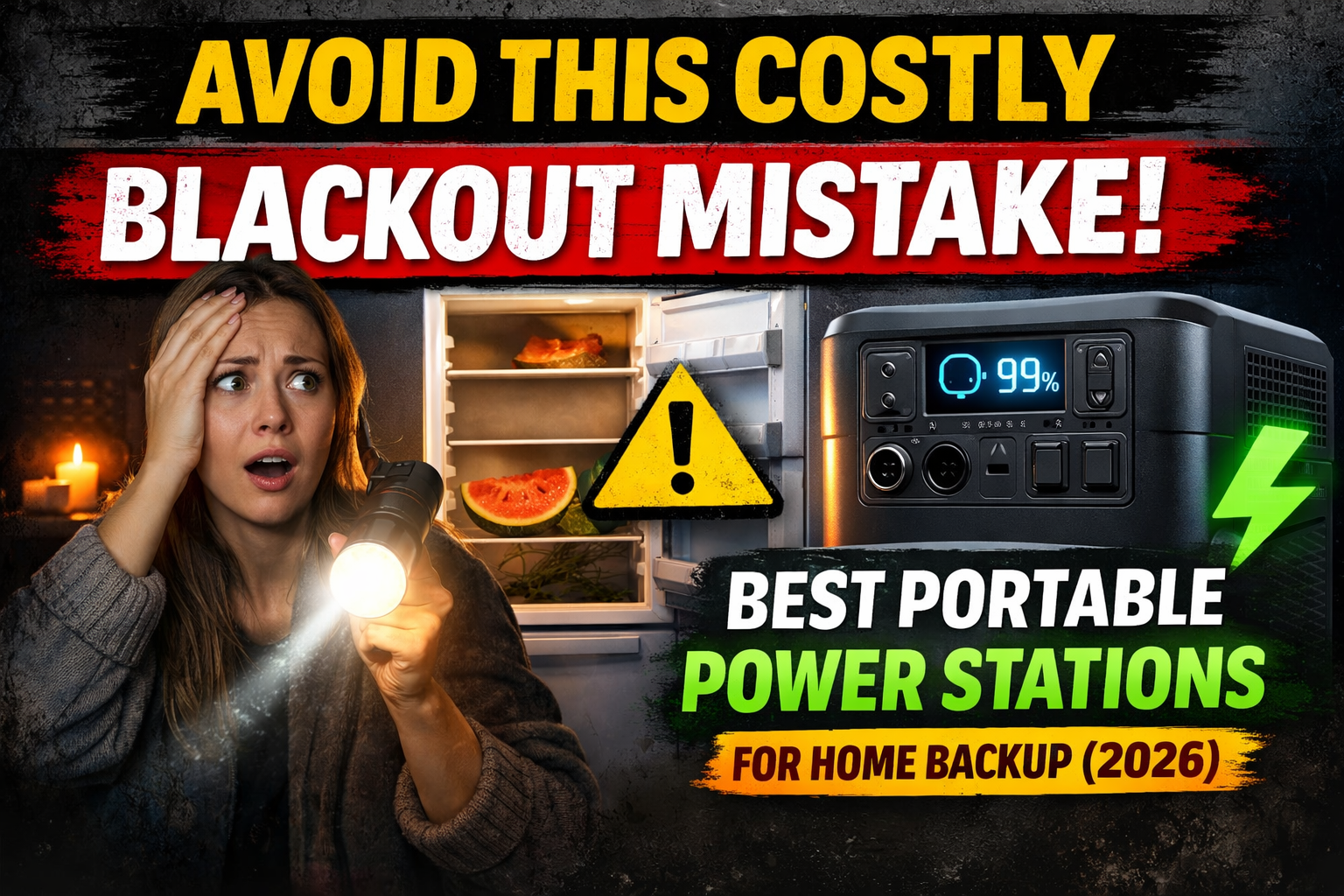
It’s 9:47 PM. A thunderstorm hits. The lights flicker once… twice… and then everything goes dark.
Your refrigerator stops humming.
WiFi router dies.
Your phone is at 18%.
The freezer full of groceries? Slowly warming up.
Now here’s the question most homeowners ask during a blackout:
“Why didn’t I prepare for this?”
In 2026, power outages across the U.S. are more common than ever — from Texas winter freezes to California wildfire shutdowns and Florida hurricanes. And while traditional gas generators used to be the go-to solution, today’s smart homeowners are switching to something safer, quieter, and more practical:
👉 Portable power stations for home backup.
This guide will walk you through the best portable power stations available right now, how to choose the right capacity, what mistakes to avoid, and how to protect your home before the next outage hits.
What Is a Portable Power Station (And Why It’s Better Than a Gas Generator)?
A portable power station is essentially a large rechargeable battery with multiple output ports:
- AC wall outlets
- USB-A & USB-C ports
- Car socket ports
- Solar charging input
Unlike gas generators:
- No fuel required
- No toxic fumes
- No loud engine noise
- Safe for indoor use
- Low maintenance
For apartments, suburban homes, RV users, and even remote workers — this is the modern blackout solution.
How Much Power Do You Actually Need?
Before buying anything, you must understand two key terms:
- Watts (W) = How much power a device needs right now
- Watt-hours (Wh) = How much energy the battery stores
Let’s break this down with a real example.
Typical Emergency Load:
- Refrigerator: 600–800W
- WiFi router: 30–50W
- LED lights: 50–100W
- TV: 100–200W
Average combined load ≈ 1,000W
If your power station has 2,000Wh capacity:
2000Wh ÷ 1000W ≈ 2 hours (continuous heavy use)
But since refrigerators cycle on and off, actual runtime is often much longer.
Quick Buying Rule:
- 500–1000Wh → Phone, laptop, lights only
- 1500–2500Wh → Basic home essentials
- 3000Wh+ → Extended outage / large family
Never guess your needs. Calculate first.
Best Portable Power Stations for Home Backup (2026 Picks)
🔋 1. Explorer 2000 Plus – Best Overall Choice
Why It Stands Out:
- 2042Wh capacity
- 3000W output
- Expandable battery system
- Solar charging compatible
This unit easily runs:
- Refrigerator
- Microwave
- Coffee maker
- TV + WiFi
Perfect for 2–4 member households.
Price Range: Around $2,000
Why homeowners love it: Balanced power + reliability + easy setup.
⚡ 2. Delta Pro – Heavy-Duty Backup Beast
If you want near whole-home capability, this is it.
Key Features:
- 3600Wh massive capacity
- 4500W output
- Expandable system
- Ultra-fast recharge
This can power:
- Large refrigerators
- Power tools
- Multiple rooms
Ideal for large homes or medical device backup.
Price: $3,000+
This is not a casual purchase. It’s a serious emergency solution.
🔌 3. AC200MAX – Best Value Power Backup
Why It’s Popular:
- 2048Wh capacity
- Expandable batteries
- Competitive pricing
- Solar friendly
It offers strong performance at a slightly lower cost than premium competitors.
Price: $1,600–$1,900
Great balance between budget and power.
🔋 4. SOLIX F2000 – Silent Apartment-Friendly Option
Why It’s Smart:
- 2048Wh
- Long battery lifespan
- Quiet operation
- 5-year warranty
Ideal for:
- Apartments
- Indoor nighttime use
- Families wanting silent backup
Price: Around $2,000
Portable Power Station vs Gas Generator
Let’s be honest.
Gas generators are powerful — but:
- Loud
- Require fuel storage
- Dangerous indoors
- Ongoing maintenance
Portable power stations are:
- Silent
- Rechargeable
- Indoor safe
- Maintenance free
For most U.S. suburban families, battery backup is simply safer and more practical.
Is Solar Charging Worth It?
If you live in:
- Texas
- Florida
- California
- Hurricane or wildfire zones
Solar panels are a game changer.
Benefits:
- Recharge without grid
- Unlimited energy (weather dependent)
- Zero fuel cost
During multi-day outages, solar keeps your power station alive.
5 Costly Buying Mistakes to Avoid
1. Ignoring Surge Wattage
Some appliances spike at startup. Check peak watt rating.
2. Buying Too Small
Many buyers regret choosing 1000Wh units for refrigerators.
3. Ignoring Expandability
Expandable systems grow with your needs.
4. Skipping Warranty
Look for at least 3–5 years.
5. Not Checking Recharge Time
Fast charging matters during emergency.
Avoid these mistakes, and your investment will last years.
Real-Life Blackout Scenario
Picture this:
Storm knocks power out for 10 hours.
With portable power station:
- Refrigerator safe
- Phones charging
- WiFi running
- Work-from-home uninterrupted
- Kids calm watching TV
Without it:
- Food spoiled
- Mobile batteries dead
- Stress rising
- Emergency hotel stay needed
Average grocery loss during blackout can hit $300–$600.
One extended outage can cost more than half the price of a good power station.
Is It Worth the Investment?
Let’s compare:
- Emergency hotel (1 night): $200+
- Food waste: $400
- Gas generator + fuel: $800–$1,200
- Noise complaints? Possible
Portable power station:
- One-time purchase
- 8–10 year lifespan
- Zero fuel cost
- Silent
Over time, it pays for itself.
Maintenance Tips to Extend Battery Life
- Recharge every 3 months
- Store between 20–80% battery
- Keep in dry, cool place
- Avoid full drain regularly
Lithium battery systems are durable but require smart care.
Who Should Buy a Portable Power Station?
You should seriously consider it if:
- You work remotely
- You live in storm-prone states
- You have medical equipment
- You store frozen groceries
- You have kids or elderly family
Backup power is no longer luxury. It’s preparedness.
Frequently Asked Questions
Can a portable power station run a refrigerator?
Yes — choose 2000Wh or higher capacity.
How long will it last?
Depends on usage. Basic essentials can run 8–20 hours.
Is it safe indoors?
Yes. No gas, no fumes.
Can it power an entire house?
Large units can power essentials, but full home integration requires advanced setup.
Are they noisy?
No. Completely silent compared to generators.
Final Verdict: Which One Should You Choose?
Best Overall: Jackery Explorer 2000 Plus
Heavy-Duty Option: EcoFlow Delta Pro
Best Value: BLUETTI AC200MAX
Apartment-Friendly: Anker SOLIX F2000
If your goal is simple emergency peace of mind, start at 2000Wh capacity minimum.
Anything less is temporary convenience — not real backup protection.
Final Warning Before You Close This Page
Most people buy backup power after a blackout.
Smart homeowners buy it before the next storm warning.
The next outage won’t send you a reminder.
Preparation is cheaper than regret.