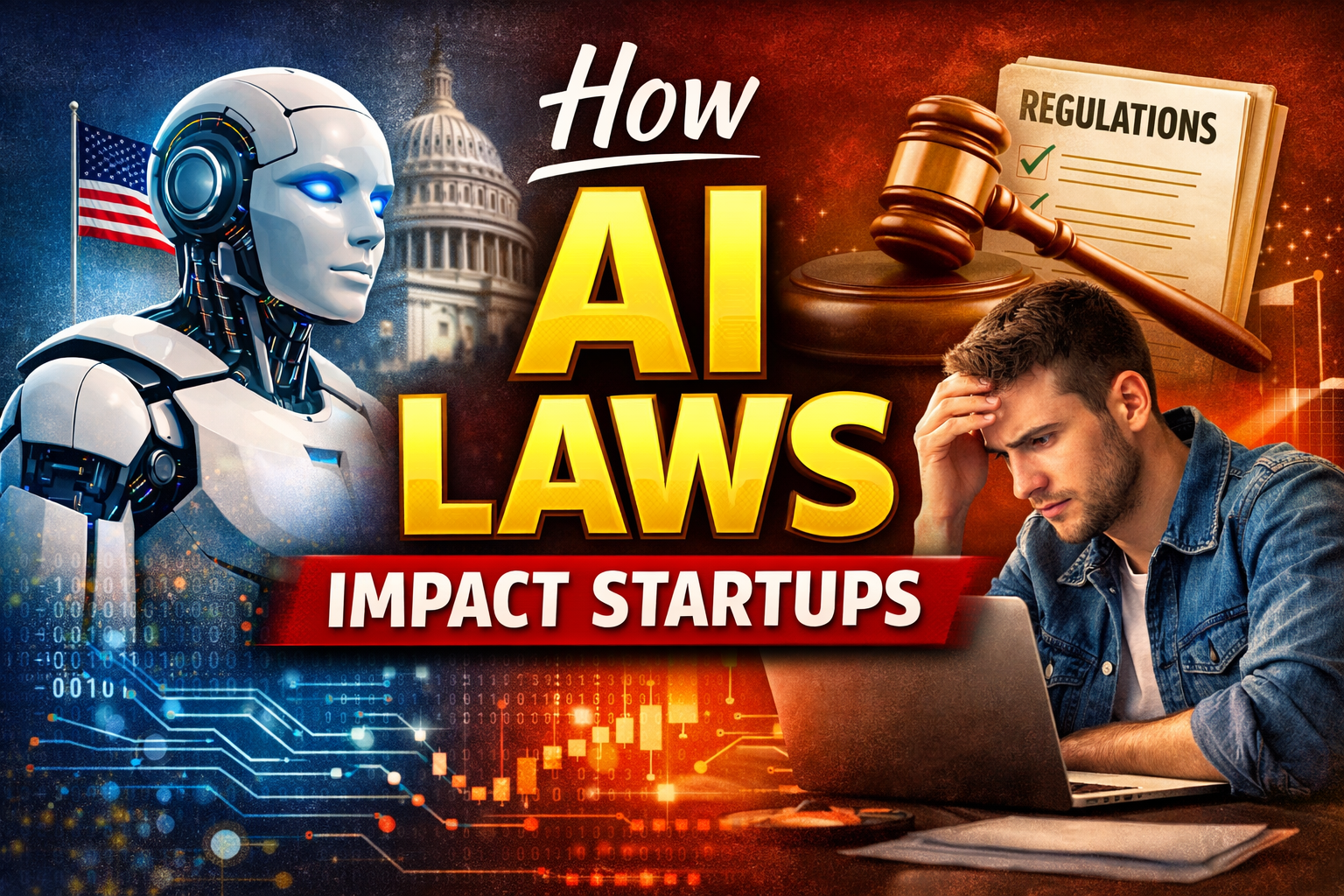
Artificial intelligence is growing faster than ever in the United States. But as innovation accelerates, lawmakers are stepping in with new rules. From federal discussions in Washington to state-level laws like California’s AI safety proposals, regulation is becoming a reality for startups.
So the big question is: Will AI laws slow down startups — or actually help them grow?
Let’s break it down.
Why the U.S. Is Regulating AI
AI tools are now used in healthcare, finance, hiring, marketing, and even national security. Companies like , , and have pushed AI into the mainstream.
Lawmakers are concerned about:
- Data privacy violations
- Bias in AI decision-making
- Deepfakes and misinformation
- National security risks
- Job displacement
The goal of regulation isn’t to stop AI — it’s to make it safer and more transparent.
How AI Laws Could Challenge Startups
1️⃣ Higher Compliance Costs
Startups often operate with limited budgets. If AI laws require:
- Independent audits
- Transparency reports
- Data documentation
- Risk assessments
That means extra legal and operational expenses. Large companies can absorb those costs — small startups may struggle.
2️⃣ Slower Product Launches
New regulations could require approval processes before launching AI systems. This may:
- Delay product rollouts
- Increase development time
- Reduce speed-to-market advantage
In tech, speed is everything. Regulation could slow innovation cycles.
3️⃣ Barriers to Entry
Strict AI rules may unintentionally favor big tech companies with strong compliance teams. That could make it harder for small AI startups to compete.
How AI Laws Could Benefit Startups
Regulation isn’t all bad. In fact, it might help serious founders.
1️⃣ Increased Trust = More Customers
Clear AI rules can:
- Build consumer confidence
- Reduce fear around AI misuse
- Encourage enterprise adoption
Startups that follow compliance standards early can position themselves as trusted AI providers.
2️⃣ Level Playing Field
If regulations apply equally to everyone, it prevents unfair dominance. This could limit anti-competitive practices by large corporations.
3️⃣ Investment Opportunities
Investors prefer predictable environments. Clear AI policies reduce uncertainty, which may:
- Increase venture capital funding
- Improve startup valuations
- Encourage long-term growth
State vs Federal AI Laws: What Startups Must Watch
The U.S. doesn’t yet have one unified AI law. Instead, regulations may come from:
- Federal agencies
- Individual states (like California and New York)
- Industry-specific regulators
Startups must track compliance across multiple jurisdictions — especially if serving U.S. customers nationwide.
What Smart Startups Should Do Now
If you’re building an AI startup in 2026, here’s how to stay ahead:
✔ Build transparency into your AI systems
✔ Document your training data sources
✔ Conduct internal bias testing
✔ Consult a tech compliance attorney early
✔ Follow updates from federal AI policy discussions
Proactive compliance can become a competitive advantage.
The Bigger Picture: Innovation vs Regulation
The U.S. is balancing two goals:
- Stay competitive globally in AI innovation
- Protect citizens and businesses from AI risks
If regulations are too strict, startups may relocate innovation overseas.
If regulations are too weak, public trust in AI may collapse.
The future likely lies somewhere in the middle.
Final Thoughts
AI laws will absolutely reshape the startup ecosystem in America. While compliance may increase costs, regulation could also create trust, stability, and long-term growth opportunities.
For founders, the smartest strategy isn’t to fight regulation — it’s to build responsibly from day one.