Most people think credit card debt becomes dangerous because of overspending.
But for millions of Americans in 2026 the real problem is something far more expensive:
Interest.
A small balance quietly grows month after month while minimum payments barely make a dent. Many cardholders don’t realize they’re paying hundreds—or even thousands—of dollars in extra interest every year without changing their spending habits at all.
That’s exactly what happened to one consumer who watched credit card interest spiral out of control after rates increased. The balance wasn’t enormous but the interest charges became financially exhausting.
Then one simple strategy changed everything.
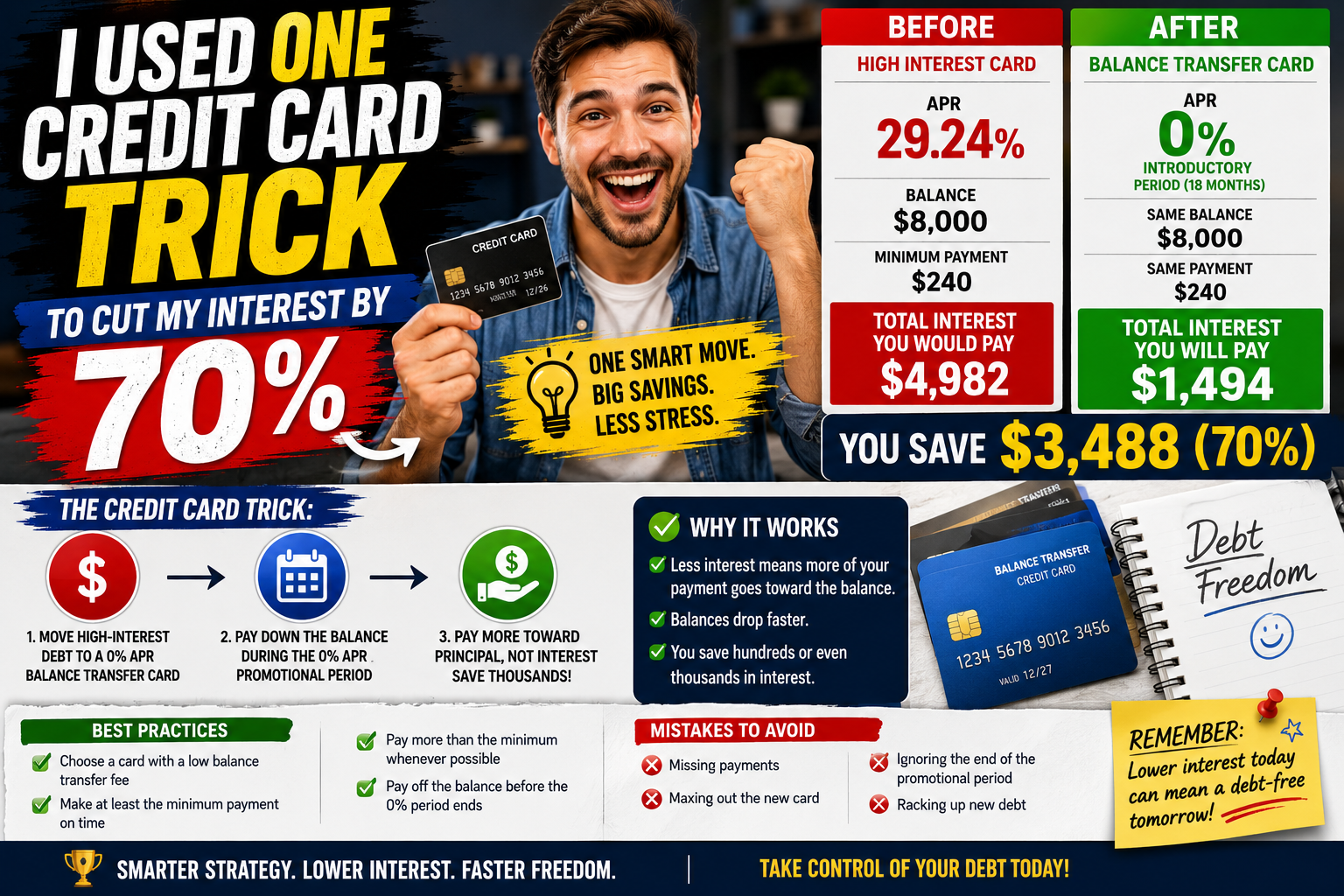
By using a lesser-known credit card payoff trick the borrower dramatically reduced interest costs by nearly 70% and accelerated debt repayment far faster than expected.
The surprising part?
The trick didn’t require earning more money winning a lawsuit or taking out risky loans.
It simply required understanding how credit card interest really works.
As average APRs remain historically high in 2026 this strategy may help consumers avoid one of the most expensive financial traps in America.
Key Takeaways
- Credit card interest may cost more than many consumers realize
- One repayment strategy can significantly reduce total interest paid
- High APR debt becomes harder to escape with minimum payments
- Balance transfer offers may reduce interest temporarily
- Paying strategically often matters more than paying randomly
- Understanding APR mechanics may accelerate debt freedom
Jump To
🔹 Why Credit Card Interest Becomes So Expensive
🔹 The Credit Card Trick That Cut Interest by 70%
🔹 Why Minimum Payments Keep People Trapped
🔹 Why High APRs Are Hurting Consumers in 2026
🔹 Smart Ways To Pay Off Credit Card Debt Faster
🔹 Common Credit Card Mistakes To Avoid
🔹 How This Strategy May Affect Credit Scores
🔹 References And Financial Resources
Why Credit Card Interest Becomes So Expensive
Credit card debt grows faster than many borrowers expect because of compound interest.
When balances remain unpaid interest gets added repeatedly making future interest charges even larger.
Example
A consumer carrying:
- $8,000 balance
- 29% APR
- Minimum monthly payments only
May spend years repaying debt while paying thousands in interest alone.
This is why many borrowers feel like balances barely shrink despite consistent payments.
The Credit Card Trick That Cut Interest by 70%
The strategy involved transferring high-interest debt to a temporary low-interest or 0% APR balance transfer card.
Instead of continuing to pay nearly 30% interest the borrower moved debt to a promotional offer charging dramatically lower rates for a limited period.
Result
- Lower monthly interest charges
- More payment money applied toward principal
- Faster debt reduction
- Significant long-term savings
In this case estimated interest costs dropped by roughly 70% compared to continuing payments on the original card.
How Balance Transfers Work
Balance transfer credit cards allow borrowers to move existing debt from one card to another.
Many promotional offers include:
- 0% introductory APR
- Reduced interest periods
- Promotional repayment windows
Why This Matters
When less money goes toward interest more money attacks the actual balance.
That may dramatically speed up repayment.
Important Warning
Balance transfers usually include:
- Transfer fees
- Limited promotional periods
- Higher rates after expiration
Consumers must read the terms carefully.
Why Minimum Payments Keep People Trapped
Minimum payments often create the illusion of progress while maximizing lender profits.
The Hidden Problem
Large portions of minimum payments may go toward:
- Interest
- Fees
- Very little principal reduction
Example
A borrower making only minimum payments on high-interest debt may remain in repayment for years longer than expected.
This is why strategic repayment matters so much.
Why High APRs Are Hurting Consumers in 2026
Credit card APRs remain historically high as borrowing costs continue rising.
Many consumers now face:
- 25% APR
- 30% APR
- Even higher penalty rates
Financial Impact
High interest may:
- Increase monthly stress
- Slow savings growth
- Damage long-term financial stability
- Extend repayment timelines dramatically
Even disciplined consumers may struggle under high-rate debt conditions.
Smart Ways To Pay Off Credit Card Debt Faster
Pay More Than The Minimum
Even small extra payments may reduce long-term interest significantly.
Target Highest APR Debt First
The avalanche method focuses on the most expensive balances first.
Consider Balance Transfers Carefully
Temporary lower APR periods may provide breathing room.
Avoid New Debt During Repayment
Adding fresh balances may restart the debt cycle.
Automate Payments
Consistent automatic payments may reduce missed-payment risks.
Common Credit Card Mistakes To Avoid
Ignoring APR Details
Many consumers focus only on minimum payments instead of interest costs.
Closing Old Cards Too Quickly
This may sometimes affect credit utilization and score factors.
Missing Promotional Deadlines
Expired promotional rates may trigger higher interest suddenly.
Continuing Overspending
Balance transfers only work when spending habits improve too.
How This Strategy May Affect Credit Scores
Balance transfer strategies may influence credit scores in different ways.
Possible Positive Effects
- Lower credit utilization
- Improved payment consistency
- Faster debt reduction
Possible Short-Term Effects
- Temporary hard inquiry impact
- New account age changes
For many borrowers the long-term financial benefits may outweigh short-term fluctuations.
References And Financial Resources
Consumers researching debt strategies may explore official consumer finance resources credit counseling organizations bank educational materials and federal financial protection guidance.
These resources may help borrowers better understand APR structures repayment methods balance transfer rules and long-term debt management strategies.
Final Verdict
Credit card debt becomes dangerous not only because of spending—but because of how aggressively interest compounds over time.
For one borrower using a simple balance transfer strategy dramatically reduced interest costs and accelerated financial recovery.
While no strategy eliminates debt overnight understanding how interest works may help consumers regain control far faster than making random payments alone.
Smart borrowers don’t just focus on balances.
They focus on how much interest silently drains their money every month.
Because sometimes the biggest financial breakthrough comes from changing the structure of debt—not just the payment amount.
Frequently Asked Questions
What is a balance transfer credit card?
It allows borrowers to move debt from one card to another often with lower promotional interest rates.
Can balance transfers really save money?
Yes especially when replacing high APR debt with lower temporary rates.
Are balance transfer cards free?
Usually not. Many include transfer fees and promotional conditions.
Does a balance transfer hurt credit scores?
It may cause temporary changes but responsible repayment may improve scores over time.
Why are credit card interest rates so high?
Rates are influenced by market conditions lender risk and Federal Reserve policies.
Is paying minimum payments bad?
Minimum payments keep accounts current but may dramatically extend repayment time.
What’s the fastest way to reduce interest?
Lower APR strategies larger payments and faster balance reduction usually help most.
Should everyone use balance transfers?
Not always. Consumers should compare fees terms and repayment ability carefully.
Final Consumer Warning
The most expensive part of credit card debt may not be what you borrowed…
It may be the interest quietly growing while you think you’re making progress.