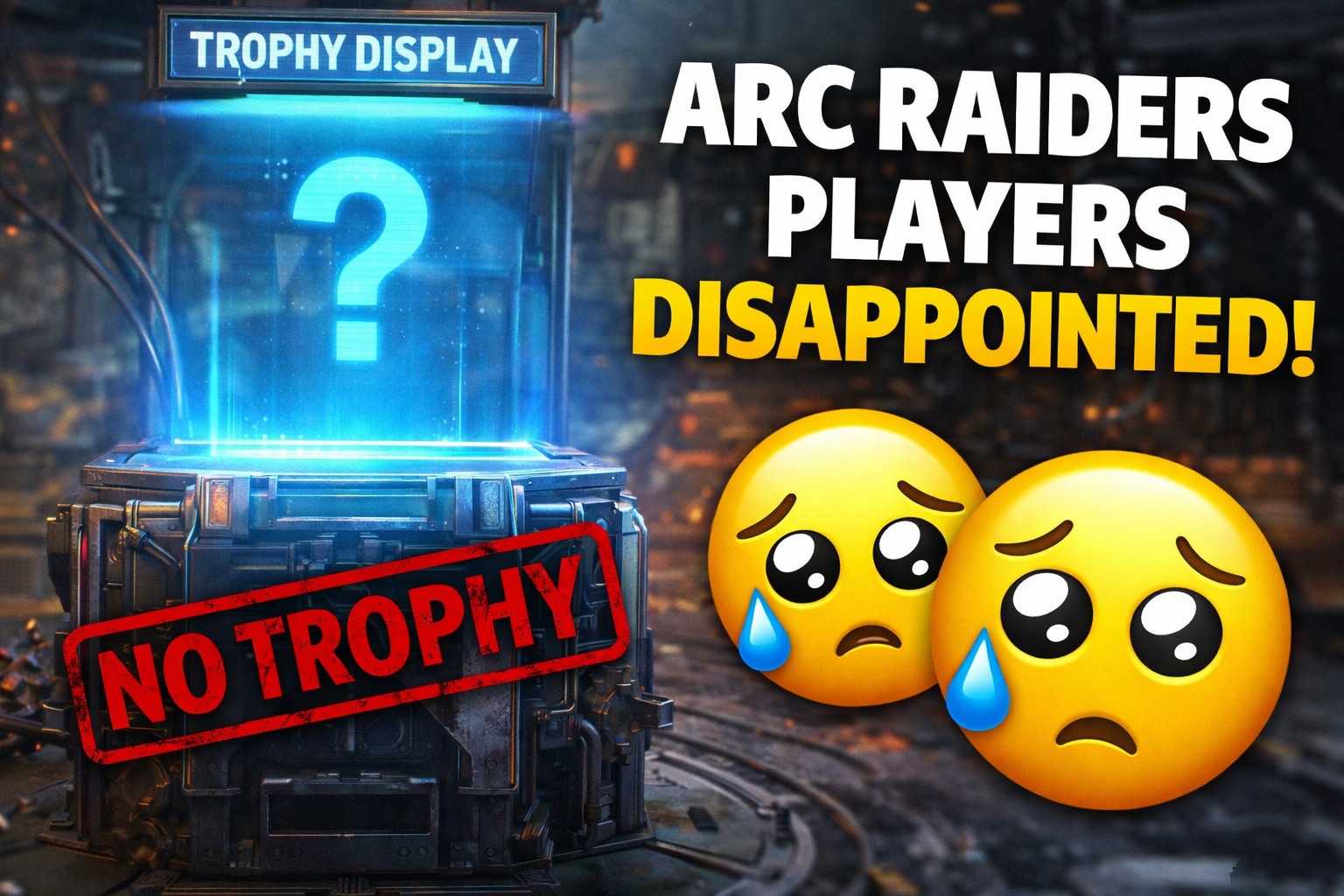
The Arc Raiders community is voicing strong frustration after the release of the latest Trophy Display project, with many players arguing that the feature fails at the one thing its name promises — delivering a trophy-worthy reward. Instead of feeling like a celebration of progress, the project has left a portion of the player base confused and dissatisfied.
Let’s break down what the Trophy Display project aimed to do, why expectations didn’t match reality, and how this reaction could shape future updates.
A Feature That Built Big Expectations
When developers introduce something labeled as a trophy system, players naturally expect a visible, meaningful payoff. In most multiplayer and live-service titles, trophy-style projects usually end with:
- A rare cosmetic item
- A visible base decoration
- A prestige badge or title
- A collectible with social value
- A displayable achievement marker
Because of this established pattern across games, Arc Raiders players assumed the Trophy Display project would end with something similarly special.
But after completing the objective chain, many discovered there was no standout trophy reward at all — and that’s where the disappointment started.
The Core Complaint: Effort Without Showcase
The strongest criticism from players centers on the mismatch between effort and outcome. Reports from the community suggest the project requires time, materials, and focused gameplay — yet the completion reward feels minimal or unclear.
Players aren’t just asking for better loot — they’re asking for symbolic recognition. In progression-driven games, visible status items matter. They give players a reason to grind, complete challenges, and show off their dedication.
Without that showcase moment, the feature feels unfinished to some.
Naming Matters in Game Design
Part of the frustration may come down to naming and presentation. Calling something a “Trophy Display” creates a specific expectation. Even if the developers intended the system as a foundation for future expansions, the current version feels incomplete in isolation.
In game UX design, terminology sets emotional expectations. When the label promises prestige but the reward feels ordinary, players feel misled — even if unintentionally.
Why Symbolic Rewards Are Powerful
Not every reward needs to be powerful gear or gameplay-altering equipment. Often, the most loved rewards are purely cosmetic. That’s because they deliver:
- Identity
- Status
- Memory of achievement
- Social visibility
- Personal satisfaction
A wall-mounted badge, animated display, rare emblem, or named artifact could have completely changed how players perceived the project’s ending.
Community Feedback Isn’t Just Complaining — It’s Data
While the reaction has been critical, it’s also valuable. Strong player feedback highlights where expectation and delivery diverge. In live-service development models, features are frequently adjusted based on community response.
Possible future improvements players are already suggesting include:
- Adding a final display item
- Unlocking tiered trophy visuals
- Granting exclusive cosmetic markers
- Expanding the project into a collectible system
- Providing profile-level recognition
The Bigger Lesson for Live-Service Games
This situation reflects a broader truth about modern multiplayer design: completion needs closure. When a feature feels like it ends without a clear reward moment, players interpret it as incomplete — even if technically functional.
Arc Raiders still has strong interest and momentum behind it, but moments like this show how important reward clarity and expectation alignment are to player satisfaction.
Final Thoughts
The Trophy Display project wasn’t rejected because players dislike new systems — it was criticized because players expected a celebratory payoff that never arrived. With clearer reward signaling and a visible completion prize, the same feature could easily shift from disappointment to fan favorite.
In live-service games, perception is everything — and sometimes, a single missing trophy can speak louder than a dozen updates.